


Senior leaders communicate constantly, in board meetings, all-hands, one-on-ones, and hallway conversations that carry more weight than either party expects. Most of that communication goes fine. It is the small number of high-stakes moments, board decisions, organisational change, performance conversations, strategic shifts, that actually determine how much a leader is trusted.
Executive communication is not a separate skill from regular communication. It is regular communication under conditions that expose every gap: less time, higher stakes, and an audience watching closely for signs of confidence or doubt.
The room is watching. Every word here carries weight.
Why Eloquence Is Not the Point
It is a common misconception that executive communication is about sounding polished, articulate, or naturally charismatic.
Some of the most trusted communicators are none of those things in the traditional sense. What they consistently have is clarity under pressure, knowing exactly what the moment requires and delivering it without unnecessary hedging or performance.
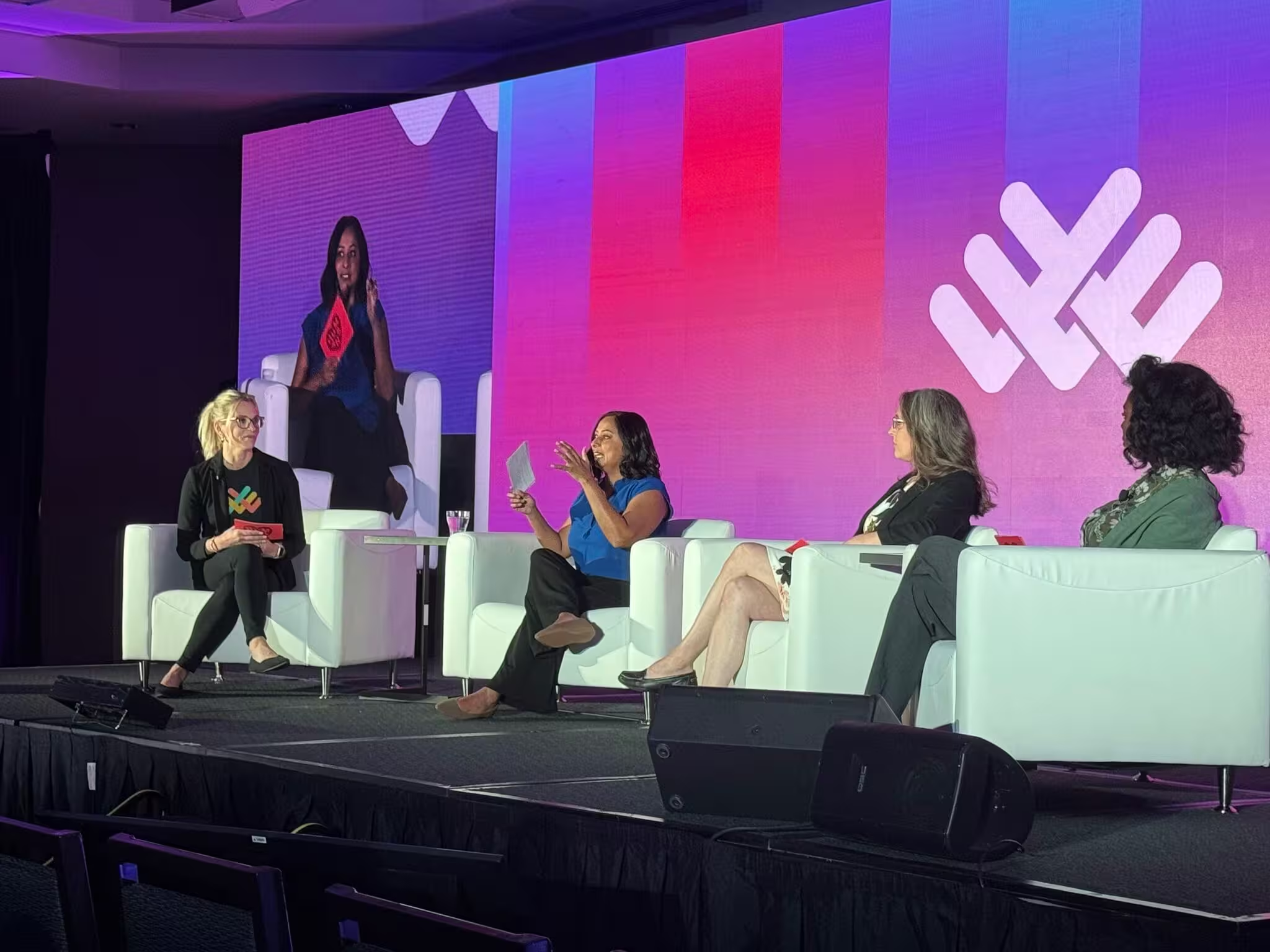
Twelve years at Bain & Company, then People and Culture leadership at two hyper-growth tech companies, means Farrah Mitra has watched this play out from the inside repeatedly. The leaders who earned the most trust were rarely the most polished speakers in the room. They were the ones who said the true thing clearly, even when it was uncomfortable.
Executive Communication in Written Form
Not every high-stakes executive communication happens out loud.
A board memo, a company-wide email announcing a change, a written update to investors, all carry the same weight as a spoken conversation but with the added challenge that tone is harder to control on the page and there is no opportunity to read the room and adjust in real time.
The same principles apply: separate fact from interpretation, be precise rather than vague, and resist the instinct to over-qualify every statement out of anxiety about how it will be received. A written message that hedges every sentence often reads as less trustworthy than one that states things plainly, even when the plain version required more courage to write.
How Executive Communication Changes as Seniority Increases
The higher a leader rises, the fewer people are willing to tell them directly when a message is not landing.
Peers offer polite feedback.
Direct reports often say nothing at all. This means the feedback loop that used to help a leader calibrate their communication naturally starts to disappear exactly when the stakes of getting it wrong are highest. This is one of the most common, and least discussed, reasons senior executives benefit from outside coaching specifically for communication: not because their skills have declined, but because the honest feedback that used to catch small problems early has quietly stopped arriving.
The Moments That Actually Matter
Not every communication carries equal weight. Board decisions require precision and honesty about risk. Organisational change requires balancing clarity with empathy. Performance conversations require directness without cruelty. Strategic shifts require confidence without overpromising.
Each of these moments has different requirements, but they share a common thread: the quality of communication directly shapes trust, execution, and what happens after the conversation ends.
A leader who handles these moments well builds a reputation that carries them through the harder ones still to come. A leader who handles them poorly, even once, often spends months rebuilding the trust that was lost in a single conversation.
What Actually Goes Wrong
The most common failure is not saying the wrong thing. It is saying the right thing in a way that does not land, because the leader has not done the internal work to communicate it with genuine confidence rather than performed confidence.
Audiences, whether a board, a team, or a single direct report, tend to notice the difference between a leader who believes what they are saying and one who is reciting a talking point they were coached to deliver.
That gap is often what determines whether a message actually builds trust or quietly erodes it.
Mindset First, Skillset Second
Most executive communication coaching stops at the skillset: how to structure a message, how to use pauses effectively, how to project confidence.
This misses the actual problem. The words a leader struggles to say are usually blocked by something underneath the surface, a fear of the reaction, uncertainty about the message itself, or discomfort with the topic.
Addressing that internal barrier first, then building the practical skillset on top of it, produces communication that holds up under real pressure rather than falling apart the moment the stakes actually rise.
Building This Skill Deliberately
Executive communication is trainable, but it requires more than watching a few videos on public speaking.
It requires working through specific real situations, not hypothetical ones, and building the muscle of staying clear and grounded when the room is watching closely.
Farrah's approach brings both the human and the commercial into coaching: the mindset work needed to communicate with genuine confidence, and the operating experience of what it actually takes to lead at a high level under real business pressure.

Your leaders are
carrying more than they need to. Let's change that.
High-performing leaders do not need more pressure. They need the confidence, clarity, and practical tools to lead difficult moments without burning themselves out. That work starts with a 30-minute conversation.